
When a tree is cut down on your property, the job is only partially finished. The trunk and branches might be gone, but an extensive network of roots and a stubborn stump remain anchored in your lawn. For homeowners in Palmetto, Florida, dealing with leftover stumps is a frequent challenge. Many property owners wonder if simply grinding the stump will be enough to stop invasive roots from continuing to grow, sprout, or damage underground utilities. Root regrowth is a serious concern that threatens driveways, plumbing systems, and pristine landscaping. Removing the visible hazard is step one. Ensuring the root system dies off completely requires a strategic approach.
Understanding Tree Root Systems in Palmetto Florida
Trees native to the Florida Gulf Coast have adapted to survive intense storms and nutrient-poor sandy soils. To achieve this, species like oaks, pines, and palms develop aggressive root systems. When you cut down a living tree, the roots do not die immediately. They store significant amounts of water and carbohydrates. This energy reserve allows the remaining root system to attempt a survival response.
In many cases, the stump will send up small shoots or suckers. These rapid growths are the tree trying to generate new foliage to photosynthesize and feed the root system. As long as the roots remain alive, they can continue to slowly expand in search of moisture. This expansion is exactly what leads to cracked concrete, disrupted pavers, and compromised underground pipes. Neutralizing the root system is a mandatory part of landscape management.
How Stump Grinding Impacts Root Survival
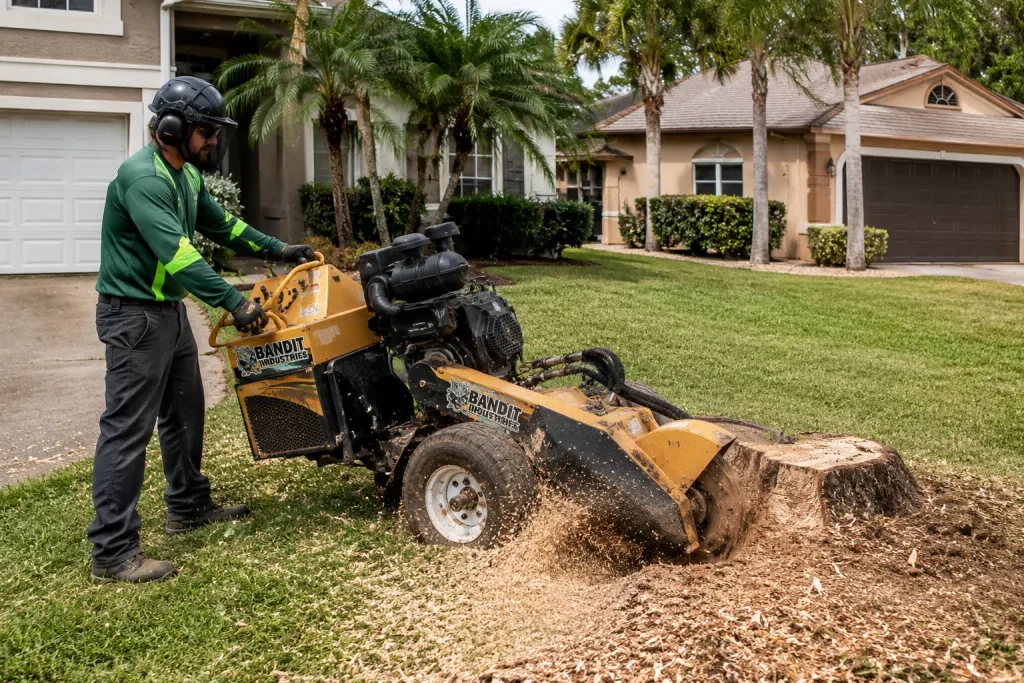
Stump grinding involves using heavy machinery with a rotating cutting wheel to chip away the wood of the stump. The machine grinds the visible wood down to several inches below the surface of the soil. But does this process actually prevent root regrowth? The short answer is yes.
By grinding the stump below grade, you effectively sever the primary hub that connects the sprawling root system. The stump acts as the central command center for the roots. It contains the dormant buds capable of producing new shoots. Once the stump is ground into mulch, the roots lose their ability to sprout new foliage. Without leaves to conduct photosynthesis, the root system is cut off from its food supply.
Over time, the isolated roots will exhaust their stored energy reserves. They will then begin a natural decomposition process. As the roots rot away underground, they return organic matter to your soil.
Choosing Professional Tree Services for Effective Stump Management
Handling tree debris requires technical expertise and heavy-duty equipment. When evaluating your options for managing a lingering stump, relying on professional tree services is the safest and most effective route. Experts can assess the tree species, the proximity to your home, and the specific soil conditions on your property to determine the precise depth needed for grinding.
It is important to understand the distinctions between different stump management methods. The choice you make will dictate the future health of your yard.
| Management Method | Process Description | Root Regrowth Risk | Cost & Effort Level | Property Impact |
|---|---|---|---|---|
| Stump Grinding | Mechanical reduction of the stump below soil level. | Very Low | Moderate | Minimal disruption, leaves woodchips for mulch. |
| Complete Removal | Excavation of the stump and the primary root ball. | Zero | High | Significant soil disruption, requires backfilling. |
| Chemical Treatment | Application of herbicides to accelerate decay. | Low | Low | Takes months to years, requires chemical handling. |
| Natural Decay | Leaving the stump alone to rot naturally. | High | Zero | High risk of sprouting, attracts pests to the yard. |
Professional arborists generally recommend grinding as the optimal balance of efficiency, cost, and property protection. Complete removal is sometimes necessary for construction projects, but it involves heavy excavation that can destroy surrounding landscaping. Grinding offers a reliable low-impact solution.
Property Risks of Ignoring an Intact Stump
Deciding to leave a stump in your yard to rot naturally is a gamble that rarely pays off for Florida homeowners. The warm, humid climate accelerates certain types of decay, but it also creates a perfect breeding ground for undesirable pests. An old stump is highly attractive to subterranean termites, carpenter ants, and wood-boring beetles. Once a termite colony establishes itself in a decaying stump, it is only a matter of time before the insects begin scouting for new food sources, which often includes the structural wood of your nearby home.
Beyond pest infestations, a living stump presents severe liability issues. As sprouts emerge, they create an unsightly mess that drastically lowers curb appeal. If the roots are still active, they will continue to seek out moisture. Your home plumbing and irrigation lines are primary targets. Roots can exert immense pressure, easily infiltrating small cracks in pipes or lifting heavy concrete driveway slabs. There is also the physical hazard of the stump itself, creating a tripping hazard for residents and complicating routine lawn maintenance.
The Long-Term Benefits of Immediate Stump Grinding
Taking swift action to grind a stump immediately after tree felling protects your property investment. Florida properties are subject to strict homeowners association guidelines and high aesthetic standards. A smooth, clear lawn devoid of hazardous stumps maintains your property value and ensures compliance with local neighborhood standards.
The woodchips generated from the grinding process also serve a highly beneficial purpose. This organic material can be repurposed as a rich mulch for your garden beds. Mulch helps retain soil moisture during the blazing summer months and suppresses weed growth. Instead of paying to haul away heavy wood debris, you gain a functional landscaping product right on your property.
Furthermore, neutralizing the root system protects your expensive hardscaping. Fixing a concrete driveway or a tiled patio that has been lifted by invasive roots can cost thousands of dollars. Grinding the stump is a minor investment that prevents massive repair bills down the road. It ensures that the root system begins its natural decay phase long before it can reach your foundation.
Partnering with Tree Service Palmetto for Your Landscape Safety
Maintaining a safe, beautiful property requires strategic care and professional execution. Tree Service Palmetto specializes in hazardous tree extraction and comprehensive landscape management for residential and commercial properties throughout the area. We understand the unique challenges posed by coastal weather, sandy soils, and aggressive tree species native to our region.
Our team of experts utilizes state-of-the-art machinery to efficiently grind stumps well below the soil surface. This guarantees that the root system is cut off from its life source, permanently halting unwanted regrowth. We prioritize safety and property protection, ensuring that our equipment causes zero impact to your surrounding grass, gardens, and hardscaping.
Whether you are preparing your property for the upcoming storm season or dealing with the aftermath of a fallen tree, our licensed professionals are ready to assist. To ensure roots do not cause future damage, visit our Contact Us page to schedule a comprehensive property assessment and secure the structural integrity of your home.
Frequently Asked Questions
Will a tree grow back if I only grind the stump?
It is highly unlikely for a tree to grow back after the stump has been ground below the soil surface. Grinding destroys the dormant buds located in the trunk and the root collar. Without these buds, the tree cannot produce the new sprouts required for photosynthesis, causing the remaining roots to eventually die and decompose.
How deep does stump grinding need to go to kill the roots?
To effectively neutralize the root system and prevent regrowth, the stump should be ground between four to eight inches below the grade of the soil. This depth ensures that the entire root collar is destroyed. For properties where new trees or deep-rooted plants will be installed in the exact same spot, deeper grinding may be required.
How long does it take for the remaining tree roots to rot underground?
The timeframe for root decomposition depends heavily on the tree species, soil moisture, and local climate. In the warm environment of Florida, smaller root systems may decompose within three to five years. Larger, more robust root systems from older hardwood trees can take up to ten years to fully break down into the soil.
Can stump grinding damage nearby plants or lawns?
Stump grinding typically affects only the immediate area around the stump. However, flying wood chips may scatter, so covering delicate plants or removing them temporarily is recommended.